During periods of extreme equity volatility, investors frequently search for secure safe-haven assets to fortify their portfolios against downside risks. For those evaluating drawdown mitigation and risk-free cash parking, comparing ultra-short US Treasury exchange-traded funds like SGOV vs BIL serves as a critical compass for disciplined asset allocation.
“To calmly capture dip-buying opportunities during market corrections and effectively buffer overall portfolio volatility, integrating an ultra-short treasury ETF cash cushion strategy—combining minimal principal risk with exceptional trading liquidity—is essential.”
1. SGOV vs BIL & Core Financial Metrics Breakdown
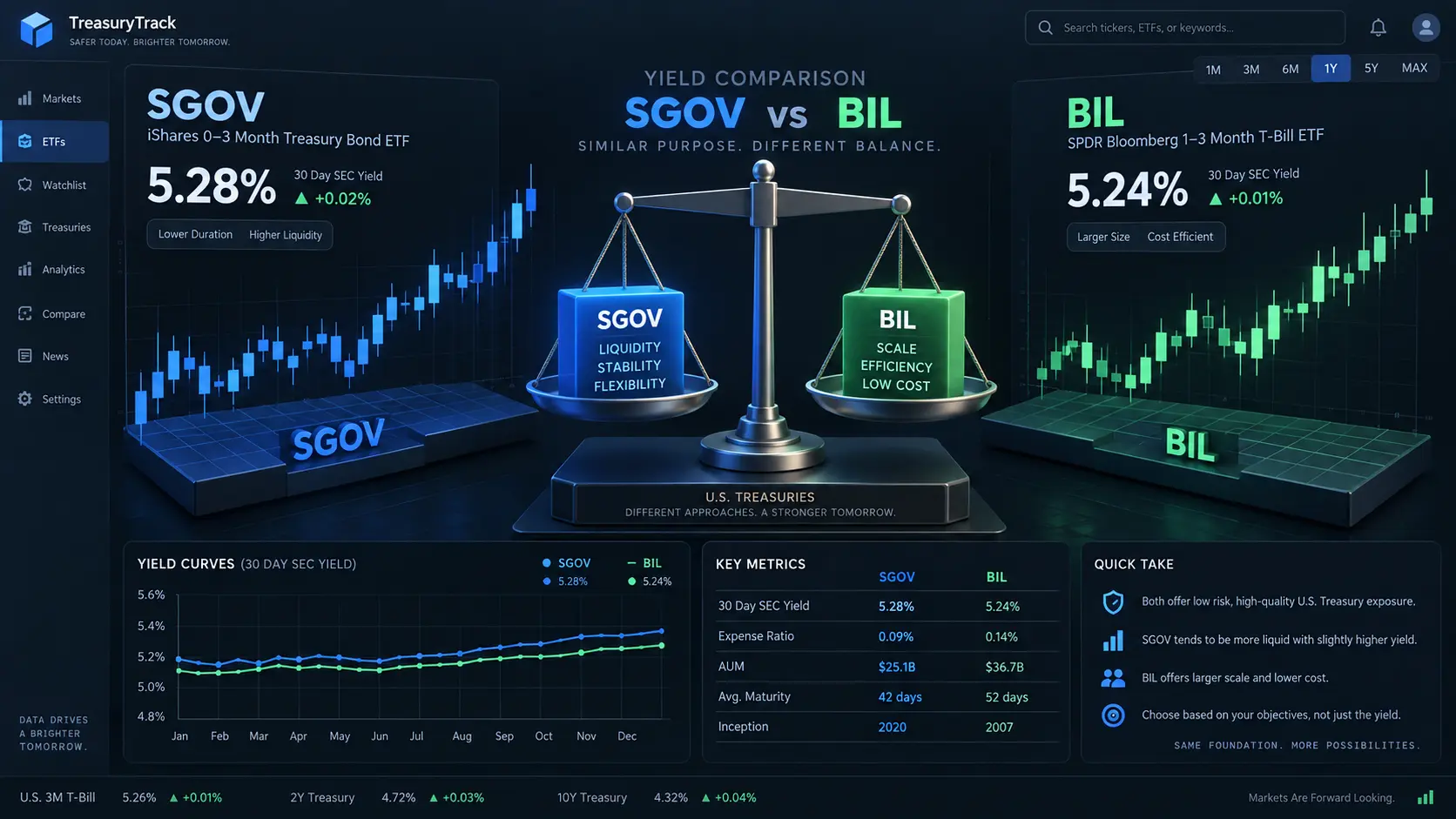
SGOV (iShares 0-3 Month Treasury Bond ETF) and BIL (SPDR 1-3 Month T-Bill ETF) provide direct exposure to ultra-short US Treasury bills issued by the United States government, prioritizing capital preservation as primary risk-free parking instruments. Both vehicles invest in short-dated obligations, ensuring that principal values remain exceptionally resilient against interest rate fluctuations. However, minor variations in expense ratios, distribution schedules, and historical liquidity volumes require investors to align their choice with individual portfolio requirements.
| Metric / Feature | SGOV (iShares) | BIL (SPDR) |
|---|---|---|
| Underlying Maturity | 0 to 3 Months Ultra-Short T-Bills | 1 to 3 Months US T-Bills |
| Expense Ratio | Low (Approx. 0.07%) | Moderate (Approx. 0.14%) |
| Distribution Frequency | Monthly | Monthly |
| Primary Advantage | Optimized cost efficiency via 0-3 month concentration | Extensive operating history and massive AUM scale |
2. Balance Sheet Quality, Cash Flow Durability, and Capital Allocation
Ultra-short treasury ETFs construct their operational baskets using government-backed short-term debt instruments characterized by pristine credit quality and guaranteed repayment structures. Because the underlying maturities are exceptionally brief, cash flow generation is directly tied to prevailing short-term federal interest rates without corporate default exposure.
Investors monitor these vehicles through brokerage platforms or technical charting software, observing steady upward price ladders that reset following scheduled monthly dividend distributions. This predictable mechanical behavior underpins their reliability as fundamental cash equivalents within corporate and individual retirement portfolios.
3. Valuation Band Modeling: Historical Multiples and Margin of Safety
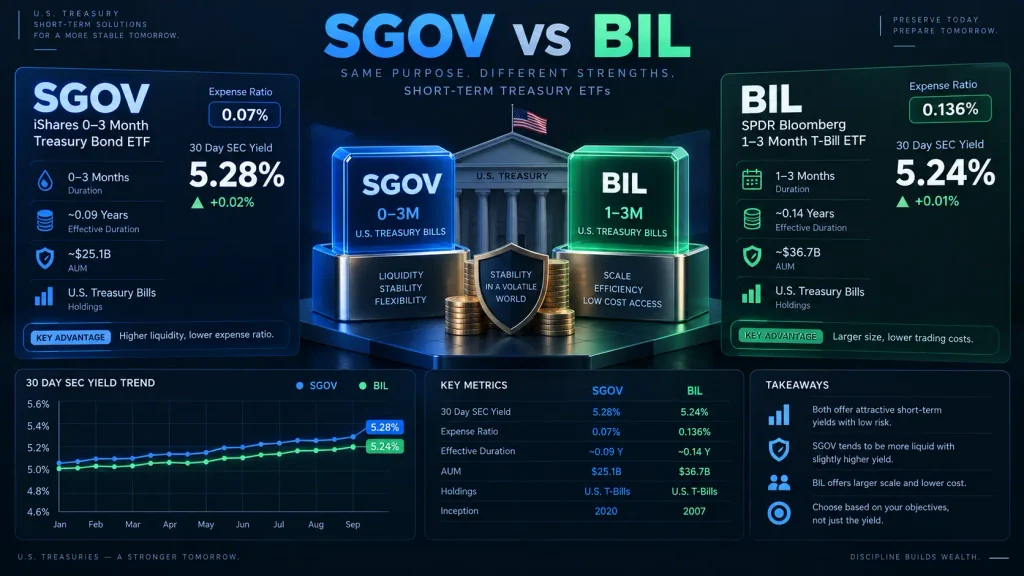
When selecting optimal cash parking vehicles, total operating expenses and market liquidity serve as primary decision variables. SGOV features a lower expense ratio than BIL, offering a slight efficiency edge for long-term holding periods, whereas BIL maintains a deeper liquidity pool backed by extensive institutional adoption.
Yield generation moves in tandem with the federal funds rate path established by the Federal Reserve. Consequently, these instruments function as effective cash cushions that generate reliable income streams while preserving capital during broader equity market corrections.
4. Portfolio Integration: Rules-Based Execution and Risk Management
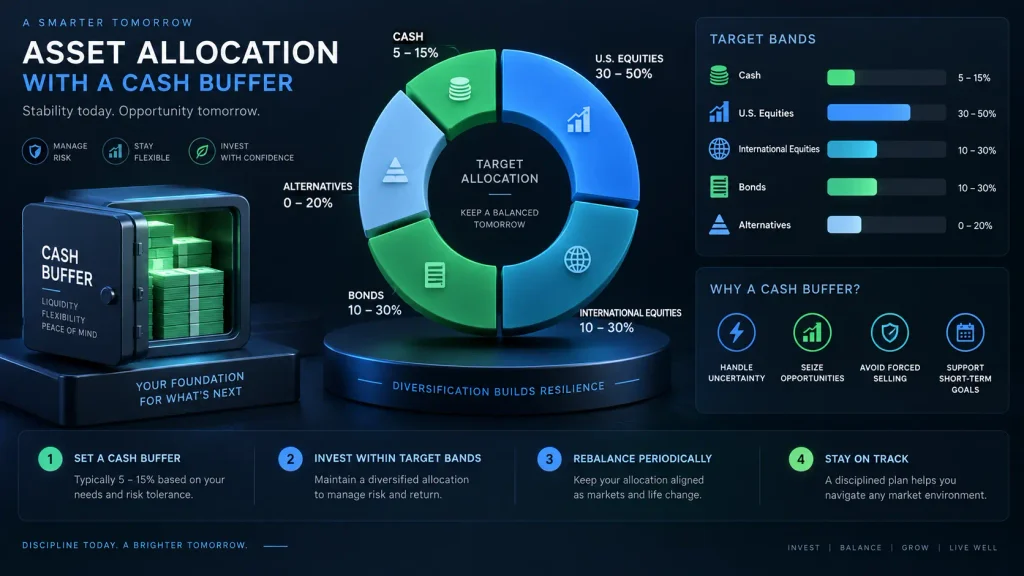
Executing disciplined asset allocation frameworks requires systematic rebalancing when equity valuations become overextended or macroeconomic uncertainties escalate. Establishing specific accumulation bands (such as $99.50 to $100.50) for SGOV and BIL enables investors to deploy cash reserves efficiently.
Adopting a systematic approach—such as scaling into short-term treasury positions during equity market peaks—bolsters the overall cash buffer. For detailed methodology on structured accumulation, review comprehensive guidance on rules-based asset allocation strategy to maintain robust portfolio resilience.
5. Frequently Asked Questions (FAQ)
What is the primary difference between SGOV and BIL?
SGOV focuses on 0-3 month ultra-short US Treasury bills with a lower expense ratio (approx. 0.07%), while BIL holds 1-3 month Treasury bills, offering an established operating history and robust trading liquidity. Both distribute dividends monthly.
Why are short-term treasury ETFs favored as downside cash buffers?
Their extremely short maturity profiles minimize principal price volatility while generating real-time interest income through monthly distributions, making them ideal for emergency cash parking.
How do interest rate cuts impact SGOV or BIL yields?
Because underlying short-term treasury yields adjust downward during easing cycles, the monthly distribution yields generated by these ETFs will gradually decrease, requiring ongoing monitoring of macroeconomic policy statements published by the Federal Reserve.
Regulatory & Investment Disclaimer
This research report is strictly for informational and educational purposes based on publicly available data. It does not constitute individualized investment advice, financial planning, or a solicitation to buy or sell securities. Past performance is no guarantee of future returns. Readers must conduct their own due diligence or consult a licensed fiduciary advisor.