Mastercard ROIC: Why the Payment Network Generates Such High Returns on Capital
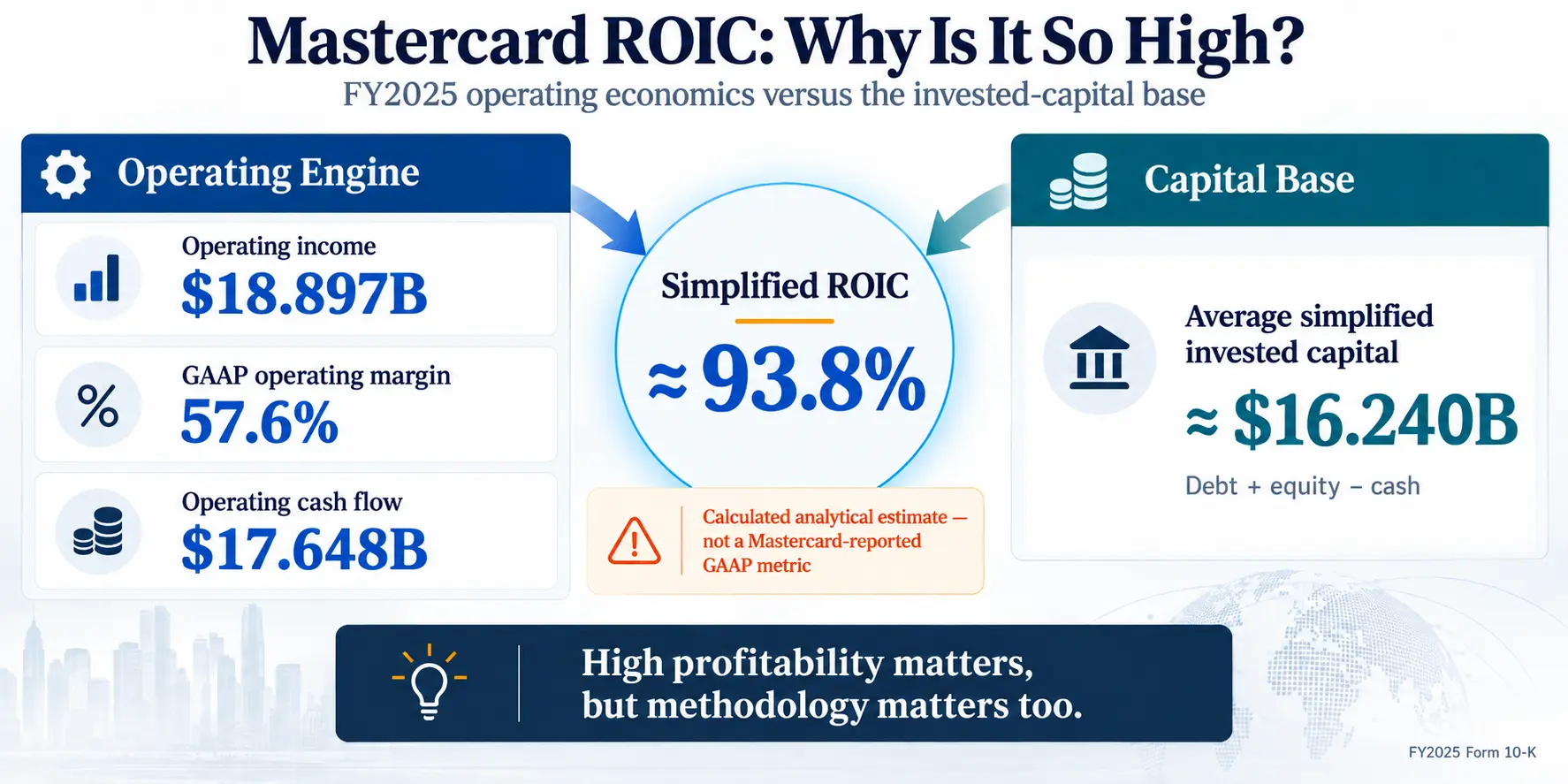
Mastercard ROIC analysis showing operating profitability and invested capital

Mastercard ROIC can look almost implausibly high when the calculation is built from the company’s FY2025 financial statements. Using a simplified approach, estimated NOPAT of about $15.231 billion divided by average invested capital of roughly $16.240 billion produces an ROIC near 93.8%. That number is useful, but not because investors should treat 93.8% as a … Read more
ROIC vs WACC: How to Measure Economic Profit and Capital Allocation

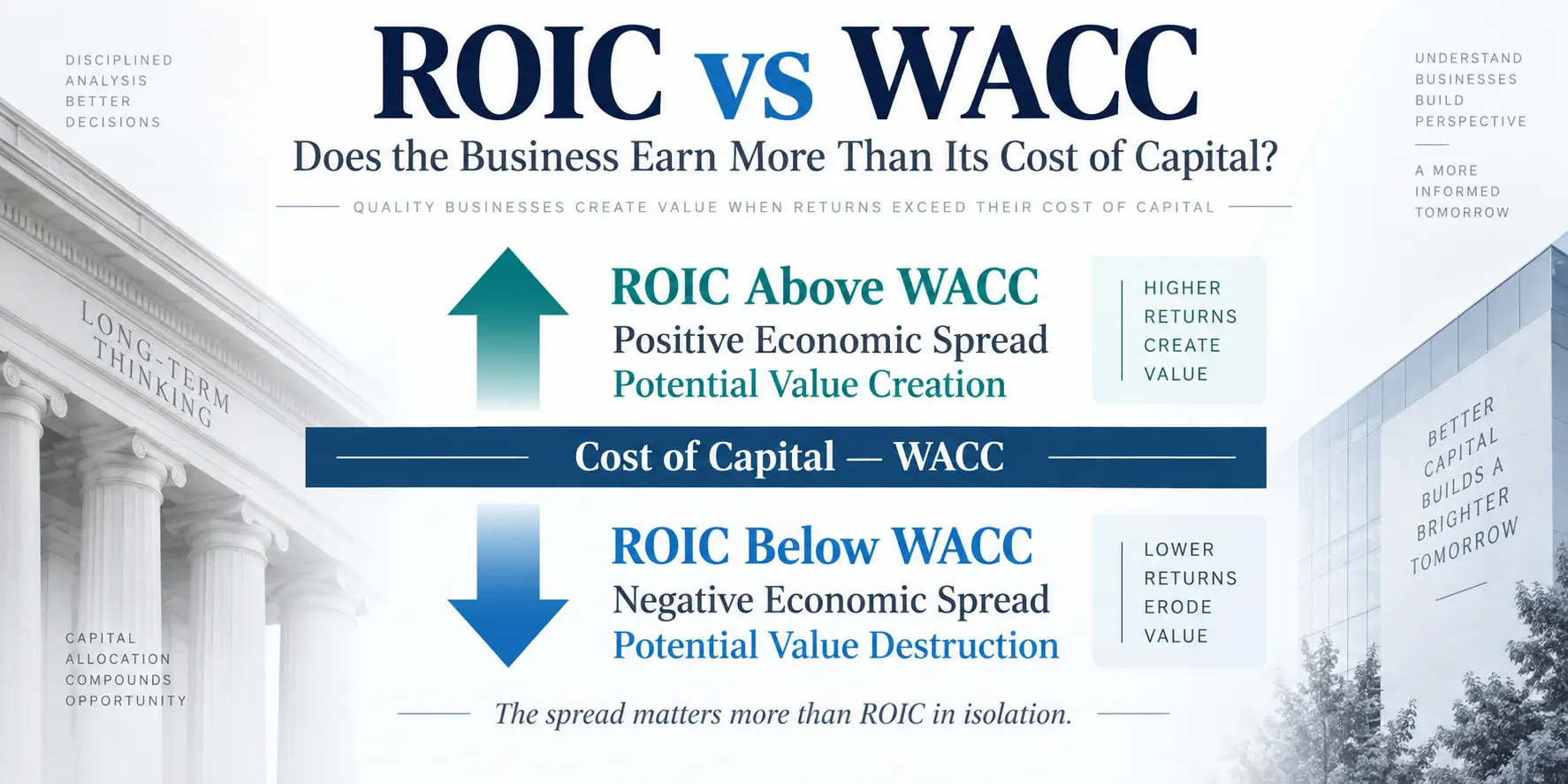
ROIC vs WACC comparison showing the spread between return on invested capital and cost of capital

ROIC vs WACC is one of the simplest ways to test whether a company is creating economic value with the capital it uses. ROIC measures the operating return generated on invested capital. WACC estimates the return demanded by the investors and lenders who supply that capital. The difference between the two is the economic spread. … Read more

How to Analyze Revenue Growth: Price vs. Volume vs. Mix

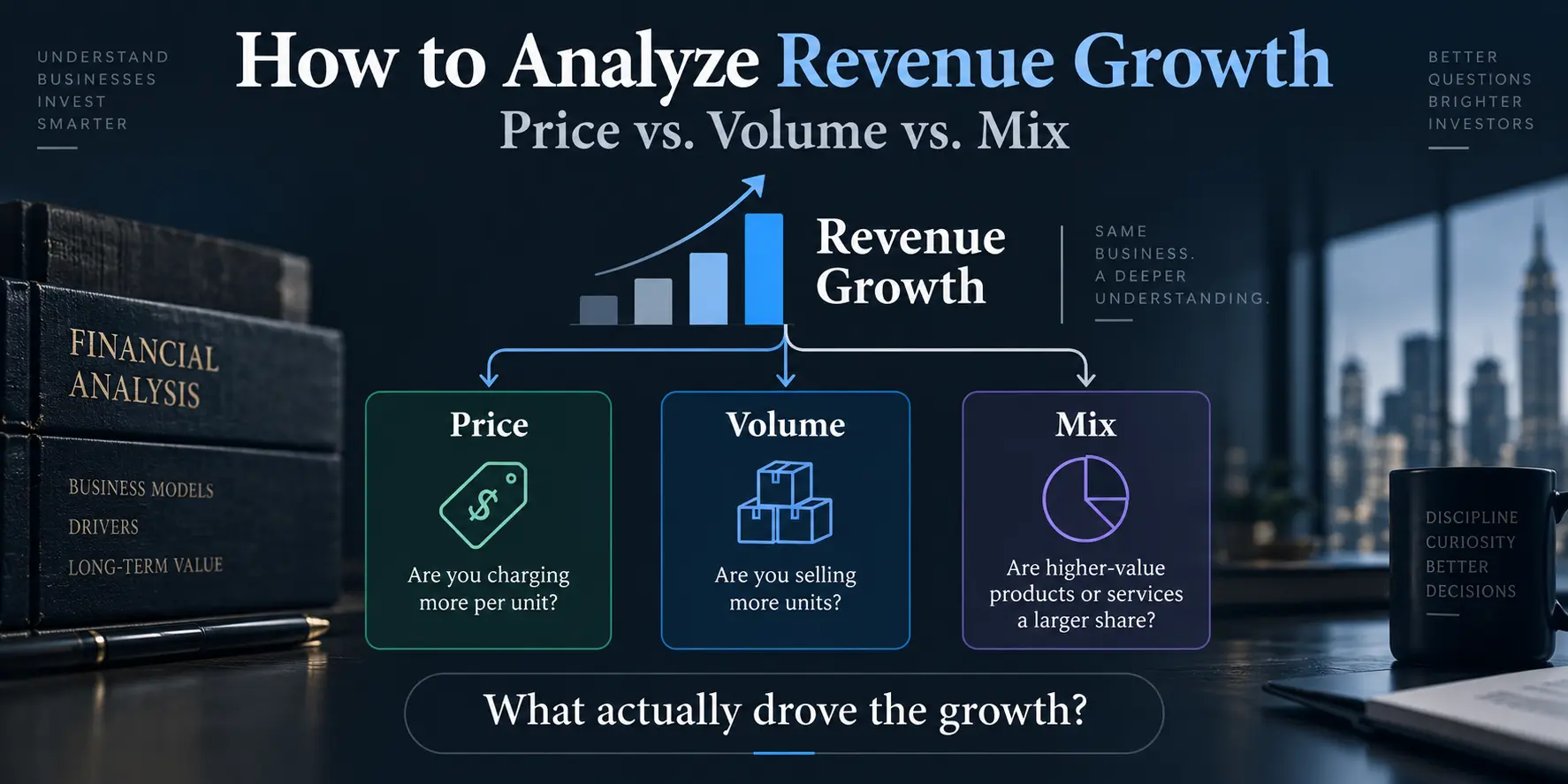
Revenue growth analysis separating price volume and product mix

How to analyze revenue growth is one of the most important questions in fundamental analysis because the headline growth rate rarely tells the whole story. A company can grow sales by raising prices, selling more units, shifting customers toward higher-priced products, benefiting from currency movements, or acquiring another business. That means investors should look beyond … Read more

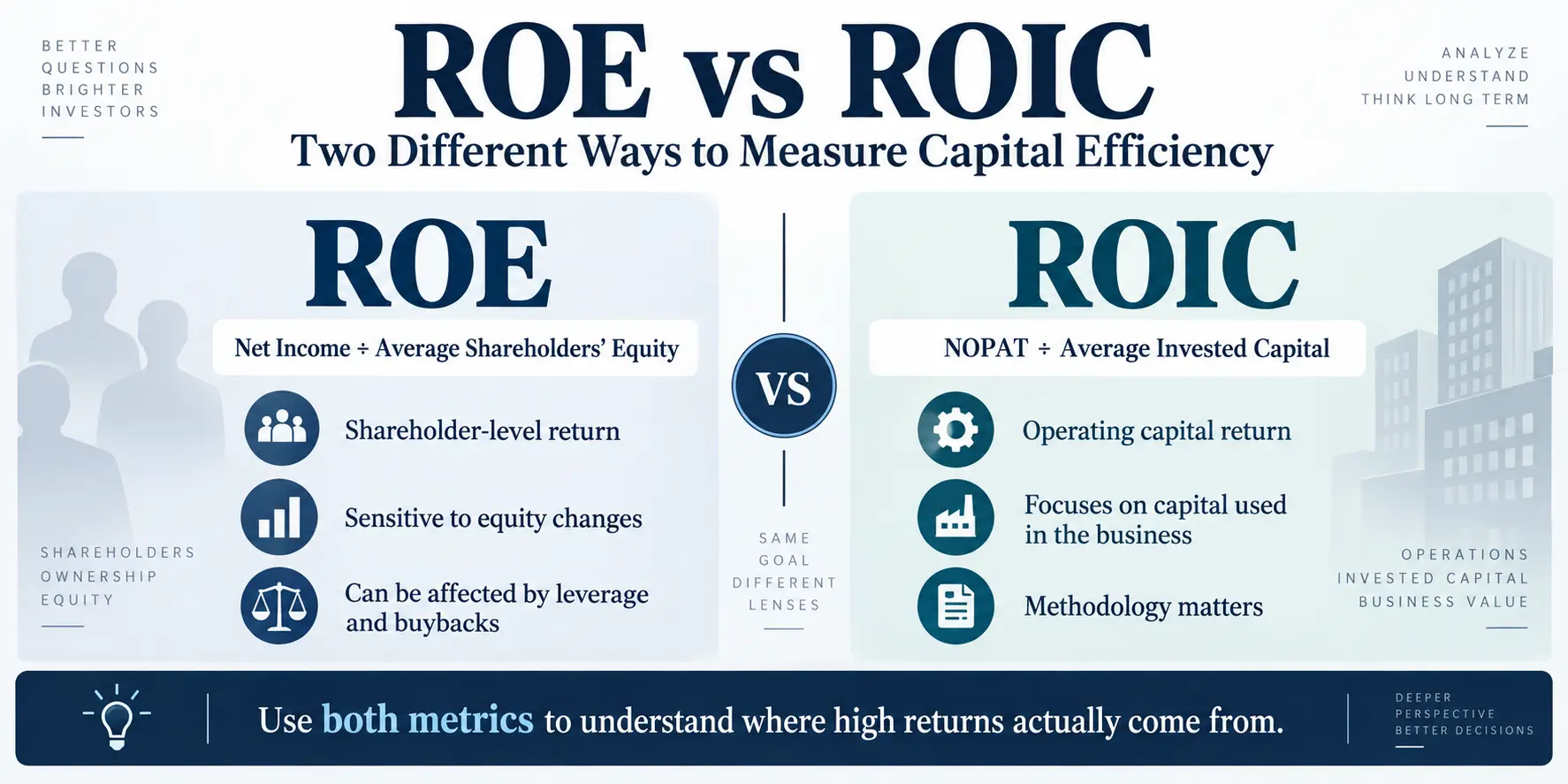
ROE vs ROIC: How to Compare Capital Efficiency and Leverage

ROE vs ROIC comparison showing shareholder returns, operating capital efficiency, and the role of leverage

ROE vs ROIC helps investors separate shareholder-level profitability from the return generated by the operating capital inside a business. ROE measures net income relative to shareholders’ equity. ROIC instead compares after-tax operating profit with the capital committed to operations. Looking at both can reveal whether a high return comes primarily from strong operating economics or … Read more

ROIC Investing Strategy: How to Evaluate Long-Term Returns

ROIC investing strategy and economic moat framework for long-term compounders

A company can report a high return on equity while generating a much weaker return on the capital committed to its operations. That difference is one reason investors examine return on invested capital (ROIC) alongside profitability, leverage, and free cash flow. An ROIC investing strategy evaluates how much after-tax operating profit a company generates relative … Read more