How to Analyze Gross Margin: 4 Essential Drivers Investors Should Check
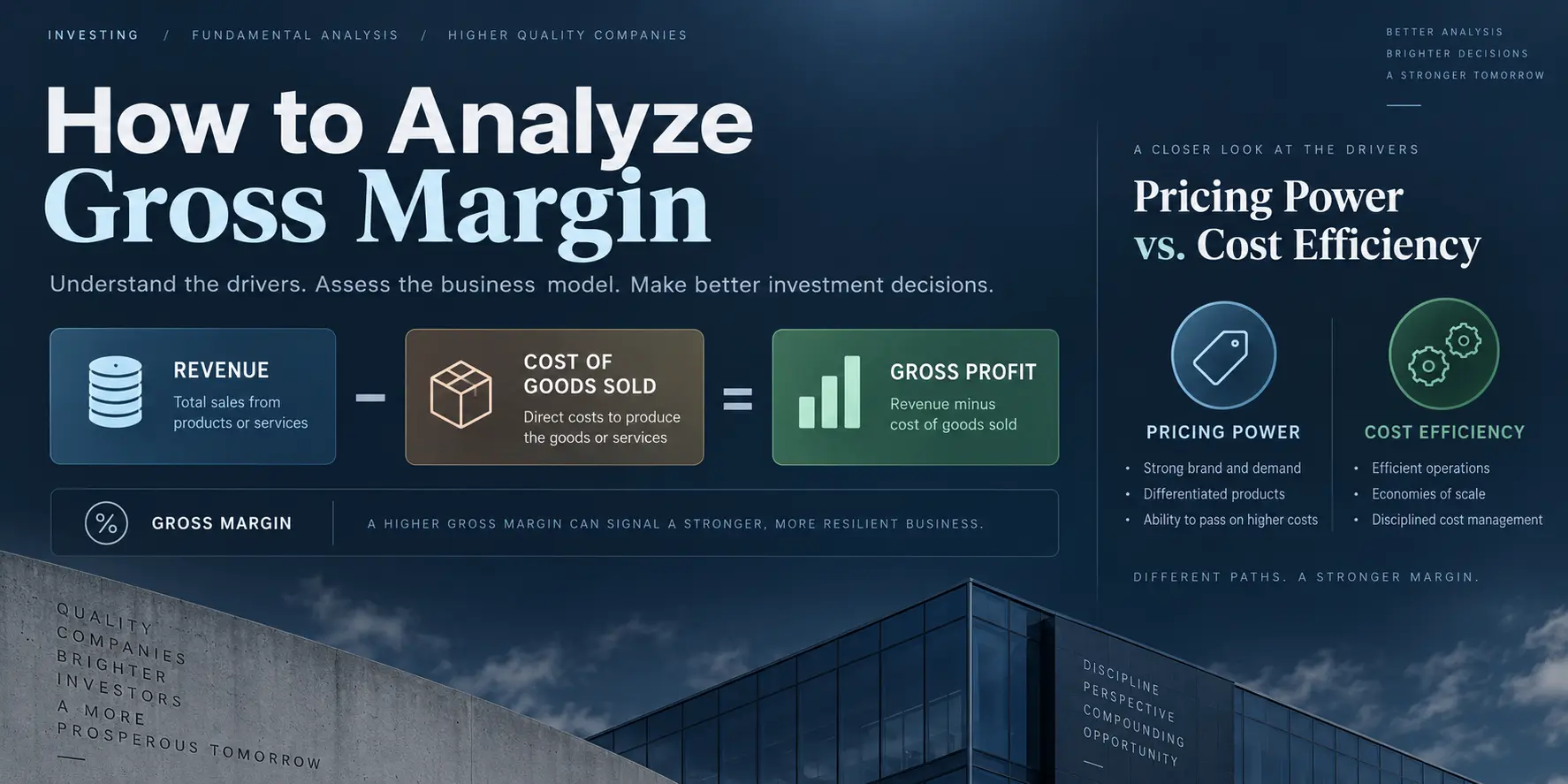
How to analyze gross margin using pricing power and cost efficiency

Learning how to analyze gross margin helps investors understand whether improving profitability comes from pricing power, lower production costs, or a better product mix. Revenue growth often gets the headline during earnings season, but higher sales do not automatically mean that a business is becoming more profitable. Gross margin can reveal useful information about pricing … Read more
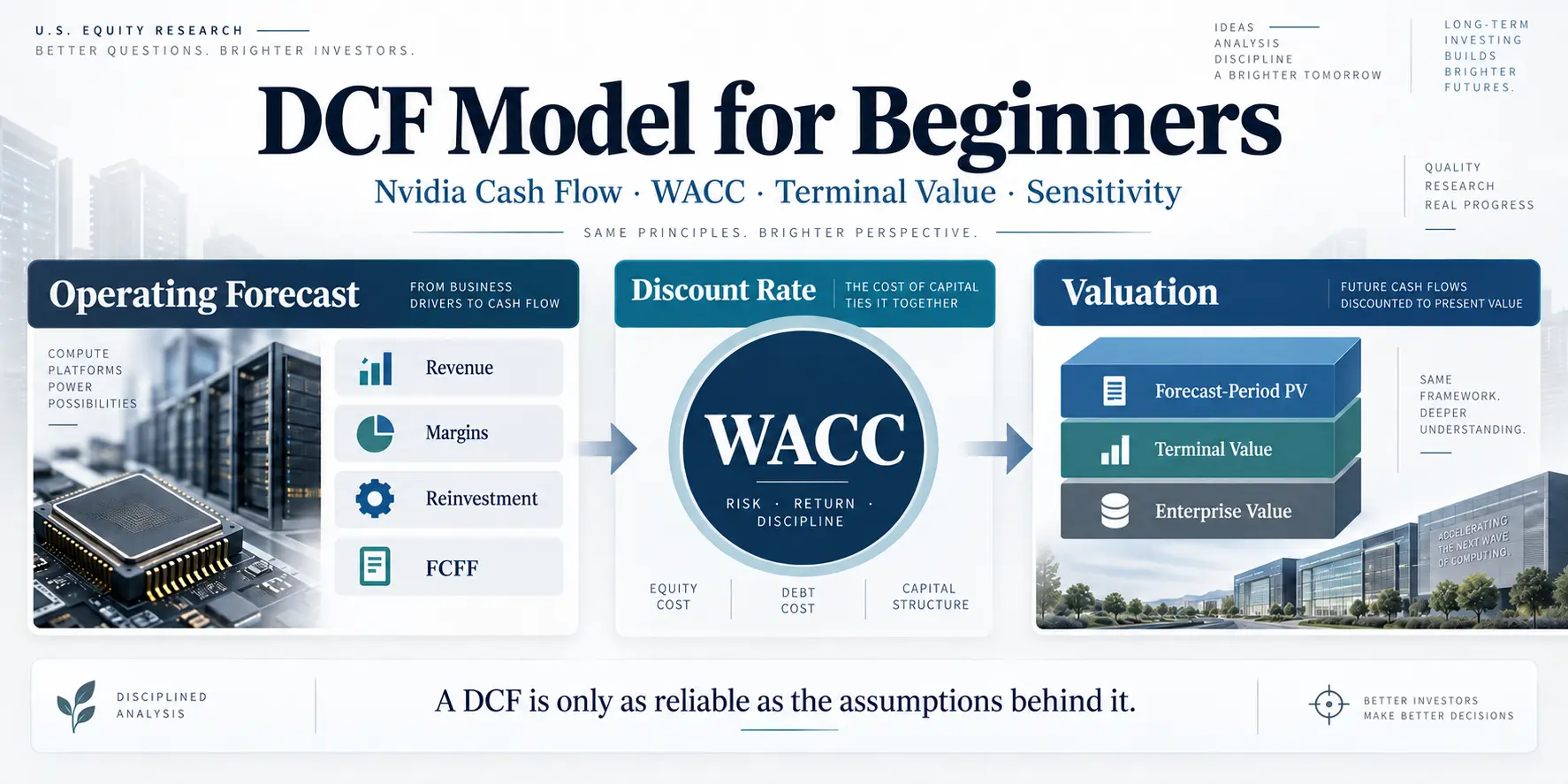
DCF Model for Beginners: Nvidia Cash Flow, WACC, and Terminal Value

DCF model for beginners using Nvidia to explain FCFF, WACC, terminal value, and valuation sensitivity

A DCF model for beginners should start with the cash flow being valued, not with a desired share-price target. Discounted cash flow analysis estimates what a business is worth by projecting future cash flows, discounting them for risk and time, and adding a value for the cash flows expected beyond the explicit forecast period. Nvidia … Read more

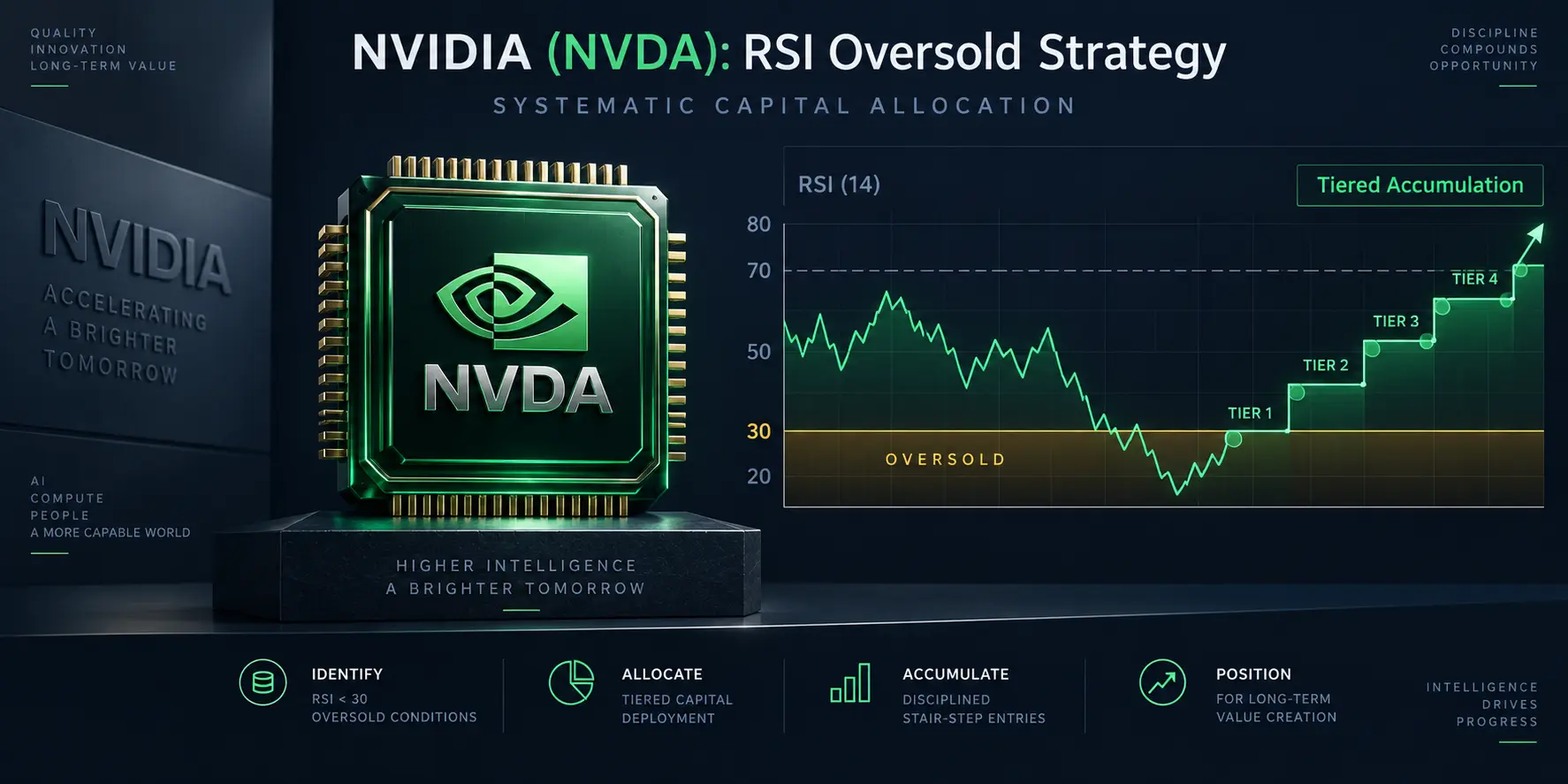
NVIDIA RSI Oversold Strategy: Signals, Risks, and Price Trends

NVIDIA NVDA RSI oversold strategy showing systematic accumulation bands and long-term support metrics

An RSI reading below 30 can draw attention to NVIDIA (NVDA) after a substantial stock-price decline. It does not establish that the stock is undervalued, that selling has ended, or that a recovery is imminent. A useful NVIDIA RSI oversold strategy treats the Relative Strength Index as a momentum indicator, not an automatic purchase instruction. … Read more

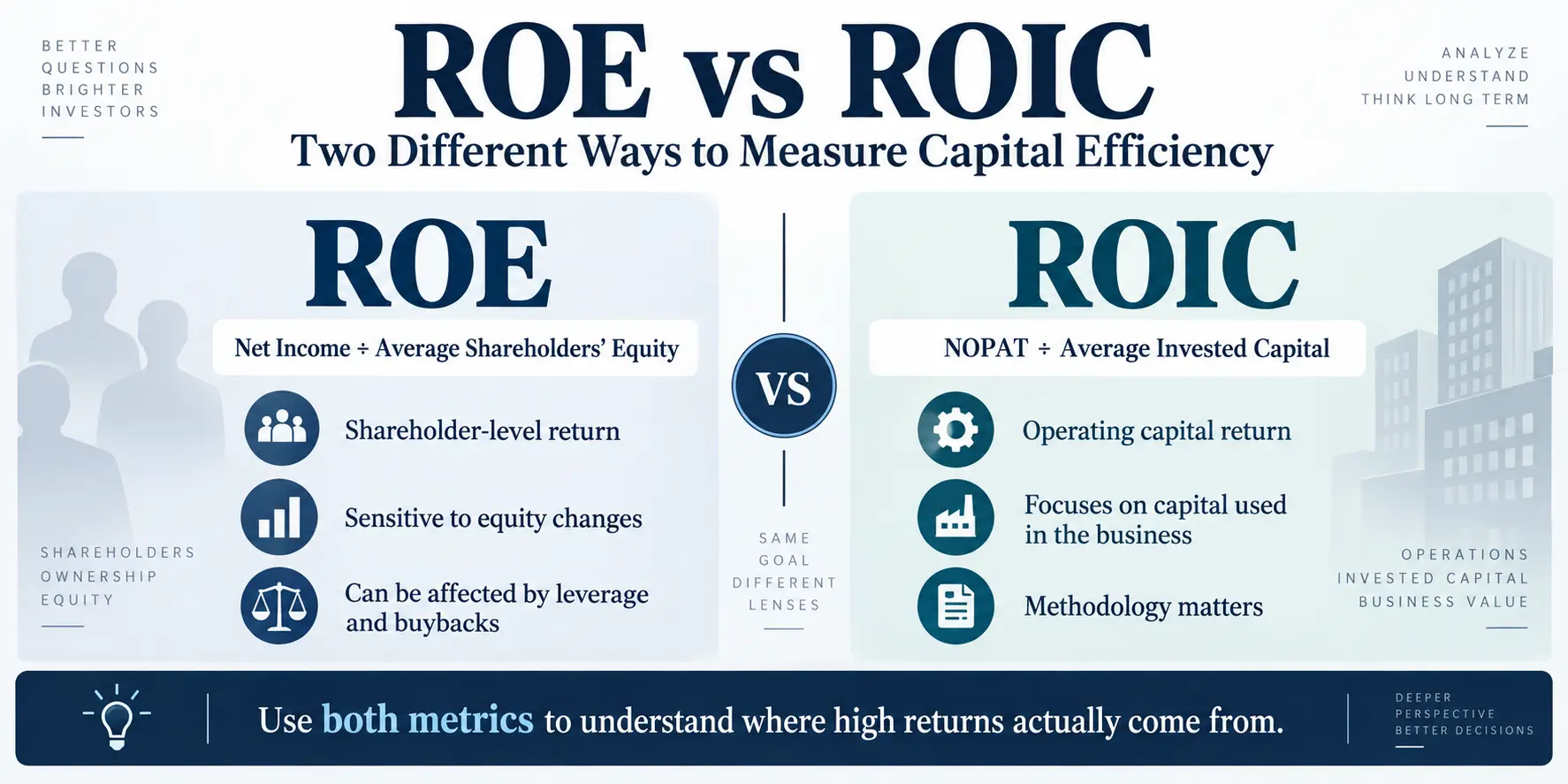
ROE vs ROIC: How to Compare Capital Efficiency and Leverage

ROE vs ROIC comparison showing shareholder returns, operating capital efficiency, and the role of leverage

ROE vs ROIC helps investors separate shareholder-level profitability from the return generated by the operating capital inside a business. ROE measures net income relative to shareholders’ equity. ROIC instead compares after-tax operating profit with the capital committed to operations. Looking at both can reveal whether a high return comes primarily from strong operating economics or … Read more

ROIC Investing Strategy: How to Evaluate Long-Term Returns

ROIC investing strategy and economic moat framework for long-term compounders

A company can report a high return on equity while generating a much weaker return on the capital committed to its operations. That difference is one reason investors examine return on invested capital (ROIC) alongside profitability, leverage, and free cash flow. An ROIC investing strategy evaluates how much after-tax operating profit a company generates relative … Read more

US Stock Market Holidays 2026: Critical Schedule & Hours Guide

US Stock Market Holidays 2026 schedule and trading hours analytical overview banner

US Stock Market Holidays 2026: Institutional Overview and Execution Realities The US Stock Market Holidays 2026 schedule designates exactly ten full operational closures and two 1:00 PM EST early sessions across the New York Stock Exchange (NYSE) and Nasdaq. Navigating these scheduled trading halts requires disciplined capital allocation, proactive order management, and a comprehensive understanding … Read more

Dividend Payout Ratio: Net Income vs. Free Cash Flow

Dividend Payout Ratio Guide infographic highlighting cash flow stability and dividend safety metrics

A dividend payout ratio measures how much of a company’s earnings or cash generation is being returned to shareholders as dividends. The arithmetic is straightforward, but there is no single percentage that can determine dividend safety across every company or industry. The traditional earnings payout ratio and the free cash flow payout ratio answer different … Read more

Free Cash Flow Guide: How FCF Differs From Net Income

Free Cash Flow Guide comparing accounting net income and liquid corporate cash reserves

Free Cash Flow vs. Net Income: Why the Numbers Diverge A comprehensive Free Cash Flow Guide starts with a simple idea: free cash flow measures cash a company generates after accounting for capital expenditures under the definition being used. Reported net income remains an important measure of profitability, but accrual accounting means earnings and cash … Read more